
- Reason 1: They help us feel safe
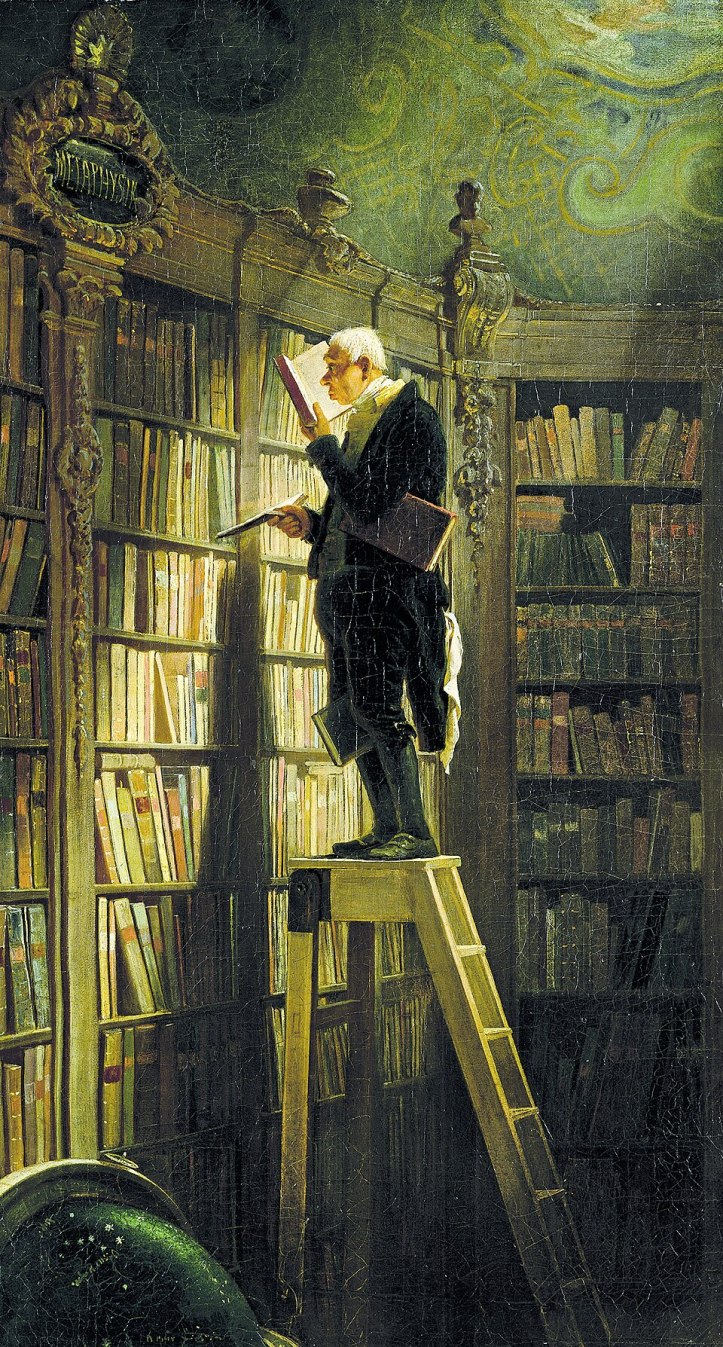 Carl Spitzweg – The Bookworm. c. 1850. Wikimedia Commons
“Go with me into the book. It’s safe here.”
Niedria Kenny, Order in the Courtroom: The Tale of a Texas Poker Player
Why are books described as ‘safe’ in this quotation? How can we ‘go into’ them?
Well, of course, we cannot physically enter the world of book, at least, not without a good deal of magic, but we can certainly enter the world of a book through our minds. Reading can enable us to be immersed in whatever is our subject of choice, and to ‘enter’ another place, another person’s deepest thoughts and feelings. Engrossed in this way, we may feel a sense of escape, of safety, and of being able to suspend, at least for a while, our own issues and daily problems.
“To acquire the habit of reading is to construct for yourself a refuge from almost all the miseries of life.”
W. Somerset Maugham
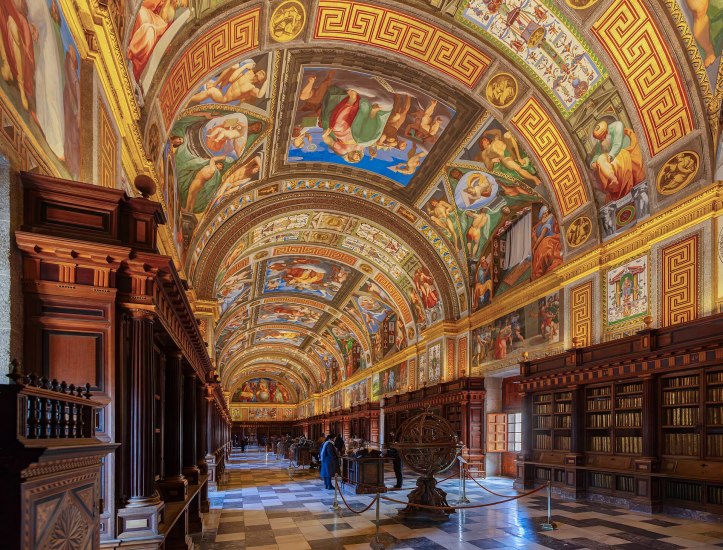 Real Monasterio de San Lorenzo de El Escorial, Madrid, España.2025. Author:Diego Delso. Wikimedia Commons
“Besides, I like libraries. It makes me feel comfortable and secure to have walls of words, beautiful and wise, all around me. I always feel better when I can see that there is something to hold back the shadows.”
Roger Zelazny, Nine Princes in Amber
This quotation highlights the comfort that books bring us, and also underlines the fact that they can hold deep wisdom, from which we can learn. They are, in addition, seen as ‘holding back the shadows,’ which can have several meanings; perhaps they prevent us from feeling too melancholy, keeping the shadows within from emerging, or maybe they protect us from the shadows of the world around us, from threats and fears outside of ourselves.
- Reason 2: They can help us to feel happy and contented
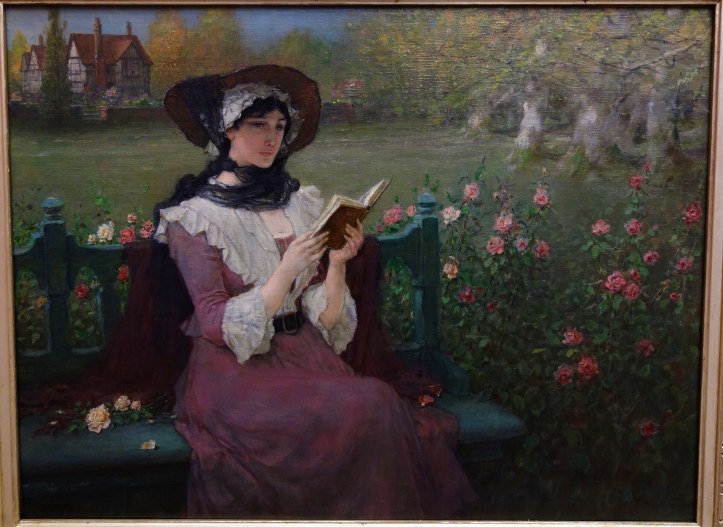 Woman Reading by George Henry Boughton, c. 1900. Wikimedia Commons
“I declare after all there is no enjoyment like reading! How much sooner one tires of any thing than of a book! — When I have a house of my own, I shall be miserable if I have not an excellent library.”
Jane Austen, Pride and Prejudice
Although this quotation was uttered insincerely by the character in Austen’s novel, taken at face value, it has much meaning. To underline this, the quote was used for a while on the UK £10 banknote, revealing its importance and its power to ‘speak’ to people. Books can bring joy and happiness, and having them in our house makes it feel much more like a home.
Most of us will also have come across this quotation, which has a similar sentiment…
“A house without books is like a room without windows. No man has a right to bring up his children without surrounding them with books, if he has the means to buy them.”
Horace Mann
These words underline the importance of having our home filled with books, which will provide a wonderful, stimulating setting in which to raise children. Without books, as Mann says, there will be no light, and no enlightenment. Indeed, having a library in one’s home can transform it into a sort of blissful place…
“I have always imagined that Paradise will be a kind of library.”
Jorge Luis Borges
For centuries, people have known that books can affect us and our homes on an almost spiritual level, imbuing them with wisdom and a sense of the magical.
“A room without books is like a body without a soul.”
Cicero
 Ilsted. The Open Door. c 1910. Wikimedia Commons.
“Books and doors are the same thing. You open them, and you go through into another world.”
Jeanette Winterson
- Reason 3: Books change things
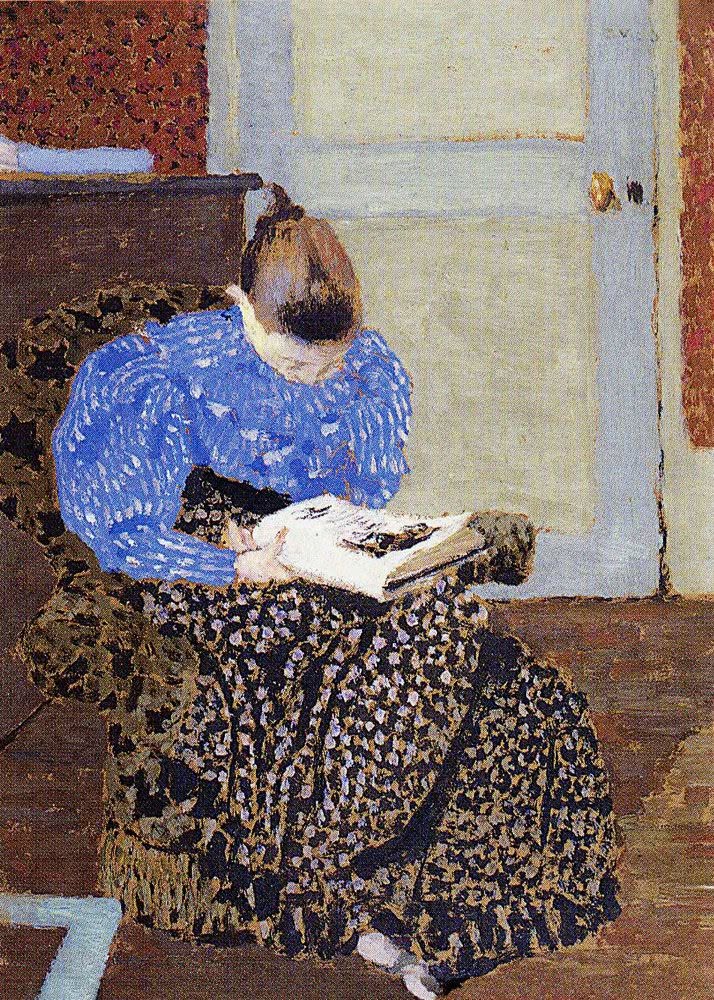 Woman Reading 1893. By Edouard Vuillard
“Isn’t it odd how much fatter a book gets when you’ve read it several times? As if something were left between the pages every time you read it. Feelings, thoughts, sounds, smells… and then, when you look at the book again many years later, you find yourself there, too, a slightly younger self, slightly different, as if the book had preserved you like a pressed flower… both strange and familiar.”
Cornelia Funke, Inkspell
This lovely, imaginative quotation reveals the ways in which a book itself changes when it has been well read… and how, in returning years later to the same book, we will also be reminded of our younger selves, somehow preserved within its well-thumbed pages.
Books influence us deeply, and can bring about a transformation of our own views and ideas. Through entering into the world of another, and learning about their thoughts and feelings, and through travelling through a book to other parts of the world, or of the universe, we can feel changed on a personal level. This can help us learn more about ourselves, especially when we recognise aspects of who we are in the pages of a book.
“Books are mirrors: you only see in them what you already have inside you.”
Carlos Ruiz Zafón, The Shadow of the Wind
Interestingly, from a historical perspective, Virginia Woolf also described books as ‘the mirrors of the soul’ in her final novel, Between the Acts (1941). Woolf lamented the fact, however, through her character Isa Oliver, that it was hard for a woman to find herself reflected in many libraries, because so often the books included were selected by men, leaving women feeling unseen and unheard. Libraries in her era tended to be highly patriarchal, and ill-equipped to reflect a woman’s soul.
In contemporary society, however, libraries, bookshops, and internet book suppliers will generally be inclusive and eclectic, reflecting the wide range of different people, ideas and interests in the world. The hope is that, in presenting a plethora of different views and opinions, books can teach us about ourselves and others, leading to changes in attitudes and to personal growth.
- Reason 4: They feel like friends
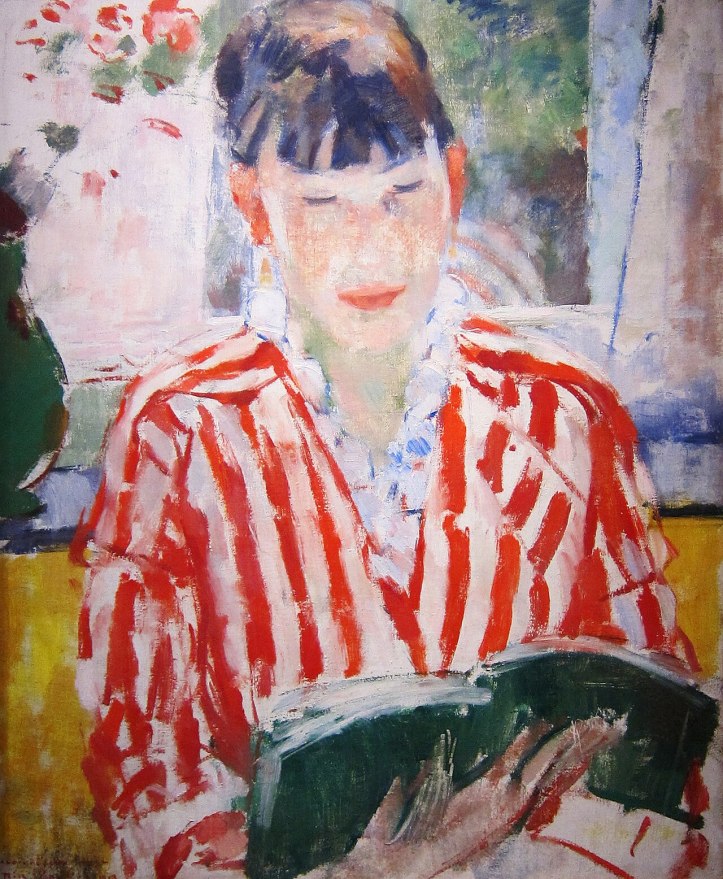 Woman Reading, 1913, Rik Wouters. Wikimedia Commons
“Books are the quietest and most constant of friends; they are the most accessible and wisest of counsellors, and the most patient of teachers.”
Charles W. Eliot
Books are abiding companions; they are always there for us. We can carry them around, like calming comfort blankets on difficult days.
“We read to know we are not alone.”
C.S. Lewis
“You know you’ve read a good book when you turn the last page and feel a little as if you have lost a friend.”
Paul Sweeney
Books also can give us a feeling of connection to others, helping us to remember that, even if we may be feeling lonely, there are people from past and present -‘friends’ – who have had similar emotions and experiences to us. We are reminded that we are part of a whole family, the human race.
On the pages of a book we can recognise the timelessness and continuity of human thoughts and feelings, and we will discover that our vulnerabilities, our deepest secrets, our doubts and fears, will begin to feel shared, validated, understood and corroborated.
“The best moments in reading are when you come across something–a thought, a feeling, a way of looking at things–which you had thought special and particular to you. Now here it is, set down by someone else, a person you have never met, someone even who is long dead. And it is as if a hand has come out and taken yours.”
Alan Bennett, The History Boys
- Reason 5: Books can set us free
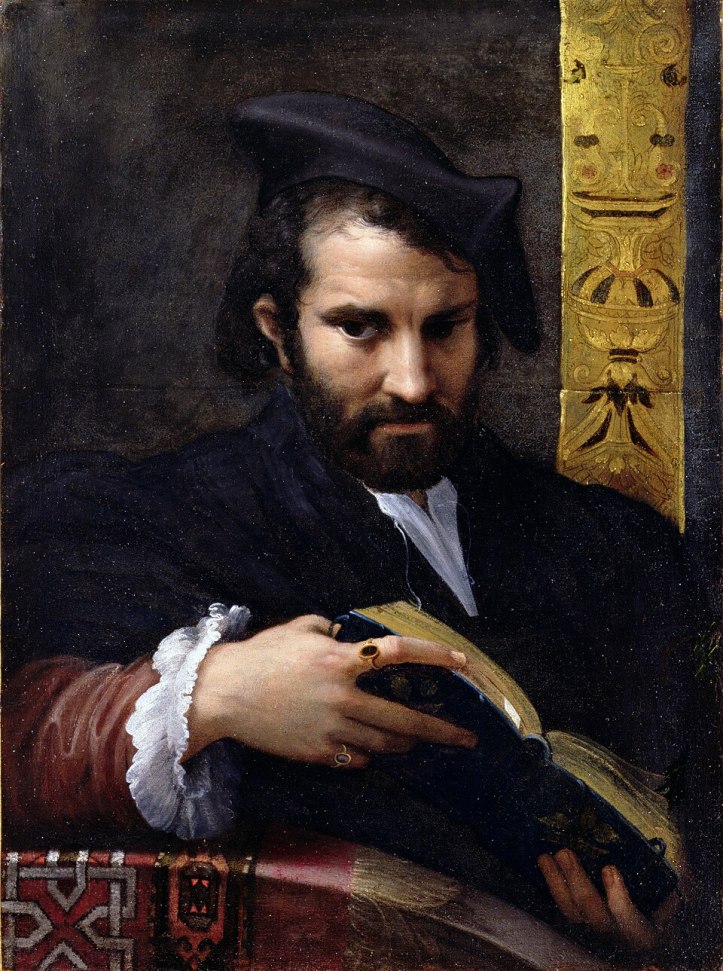 Portrait of a man with a Book by Parmigianino. 1524. Wikimedia Commons
“Once you learn to read, you will be forever free.”
Frederick Douglass
Why does reading set us free? A book can act as an escape from the bounds of reality, a way out of the daily grind, a welcome distraction from life’s inevitable routines in which, at times, some of us might feel trapped.
Books can also set us free through stimulating our imagination, enabling us to ‘fly’ to great heights of inspired creativity, teaching us new facts about worlds, ideas, introducing us to ways of thinking that we may never have even glimpsed, or contemplated. These can be transmitted to others, young and old, teaching them about the world in myriad invaluable ways, helping people be less stressed, more informed, and certainly wiser.
 Auguste Renoir – Girl Reading. 1890. Wikimedia Commons
“Literature is the safe and traditional vehicle through which we learn about the world and pass on values from one generation to the next. Books save lives.”
Laurie Anderson
© Linda Berman
Yes, books are my lifeline. Thank you!
Mine too Janet! Thanks for your comment.