
Quote 1
 Night and Sleep. Evelyn de Morgan, 1878
“It is a common experience that a problem difficult at night is resolved in the morning after the committee of sleep has worked on it.”
John Steinbeck
Have you ever gone to bed thinking about what appears to be an insoluble problem and then woken up in the morning with some kind of answer? The power of our unconscious mind, if we trust it to help us through our perplexing issues, is immense. In days gone by, many people recommended that we should ‘sleep on it’ if something seemed too tricky to work out in our waking hours, and this so often proved to be wise advice.
Steinbeck’s ‘committee of sleep’ refers, in reality, to evidence-based neurological processes that enable connections to be made, emotions to be processed, and solutions to be found. With a clearer head and more focussed thinking, we can often feel more able to face the day after a good night’s sleep.
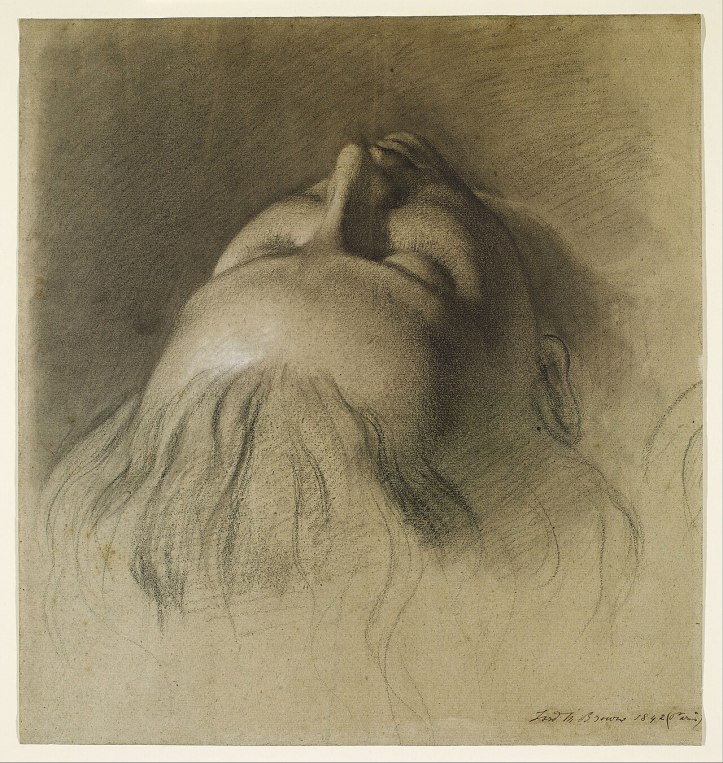 Ford Madox Brown – Parisina’s Sleep – Study for Head of Parisina. 1842. Wikimedia Commons
“Dreaming permits each and every one of us to be quietly and safely insane every night.”
Charles Fisher
Dreams represent the unconscious mind sending up messages to enlighten and guide us, if only we can understand and take note of them. Sometimes, our dreams feel like madness and are difficult to decipher, but such bizarre dreams can be complex and intricately meaningful.
As the quotation above tells us, it is important that dreaming can allow us to be ‘safely insane;’ we all possess this safety valve through which we can quietly vent and process the irrational and chaotic parts of ourselves without harm. These often disturbing aspects of ourselves are repressed and restrained during our waking hours, so that we can get through the day; during sleep we have a safe time to work them through and to process the ‘madness’ inside ourselves.
“The interpretation of dreams is the royal road to a knowledge of the unconscious activities of the mind”
Freud
Dreams are crucially important to be explored in psychoanalytic psychotherapy; these coded communications directly from our unconscious are about our hopes, our inner conflicts, our fears and our hidden, latent desires. We all have them, and the degree to which we allow these less socially acceptable aspects of ourselves to come to consciousness varies from person to person, according to their willingness and openness to face the difficult parts of themselves.
Freud regarded dreams as reflective of the events of the previous day, and at the same time, he emphasised that they are linked to important, deeper past issues.
Their messages are concealed in symbols so that they do not hit us too hard and create too much anxiety; this is a kind of self-protective mental censorship.
 The Dream of the Fishes – Walter Gramatté. 1919. Wikimedia Commons
“ Dreams . . . are often most profound when they seem most crazy. ”
Sigmund Freud, The Interpretation of Dreams (1899)
Sometimes we cannot remember our dreams; we all do have them, but they may be too deeply hidden in our unconscious. We may unwittingly block out all dreams.

Shadow Text (Texte d’ombre) from the portfolio Emptiness and Shadow (Le Vide et l’ombre) from Phenomena (Les Phénomènes) – (Jean Philippe Arthur Dubuffet)
“People who are most afraid of their dreams convince themselves they don’t dream at all.”
John Steinbeck
Within our minds, we all have an internal landscape, a vast and complex internal world of our own creation, both conscious and unconscious, a blend of many aspects, including memories, dreams, beliefs, imaginings, experiences, fears, thoughts and feelings.
 Odilon Redon. Le Rêve, 1905. Wikimedia Commons
Dreams give us an opportunity to understand what might be happening in our inner world. With the help of a therapist, and by allowing ourselves to think and feel about the dream, its effects and meanings, we may discover previously unknown aspects of our inner self.
Talking about fears, fantasies, dreams and wishes in therapy is a way of understanding what might be happening in our unconscious mind. This might be influencing us and our behaviour, affecting our life without our conscious awareness.
‘A nightmare is a failed dream, a dream that, by not “handling” anxiety, has failed in its role as the guardian of sleep.”
Irvin D. Yalom
Nightmares are clearly explained in this quote from Yalom. Dreams are there to help us process and work through difficult feelings, yet sometimes this is, in itself, an overwhelming task, and the powerful dream content breaks through. Such scary dreams may recur because they still need to be understood and worked on.
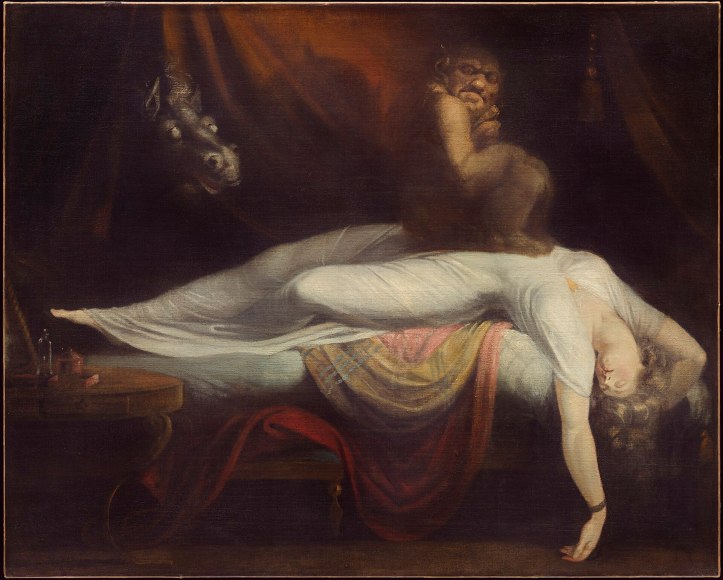 Johann Heinrich Füssli 1781. The Nightmare. Wikimedia Commons
“…night after night, with calm incuriousness we open the door into that ghostly underworld, and hold insane revels with fantastic spectres, weep burning tears for empty griefs, babble with foolish laughter at witless jests, stain our souls with useless crime, or fly with freezing blood from the grasp of an unnamed dread; and, with the morning, saunter serenely back from these wild adventures into the warm precincts of the cheerful day, unmoved, unstartled, and forgetting.”
Elizabeth Bisland, Dreams and their Mysteries
- Disturbed sleep
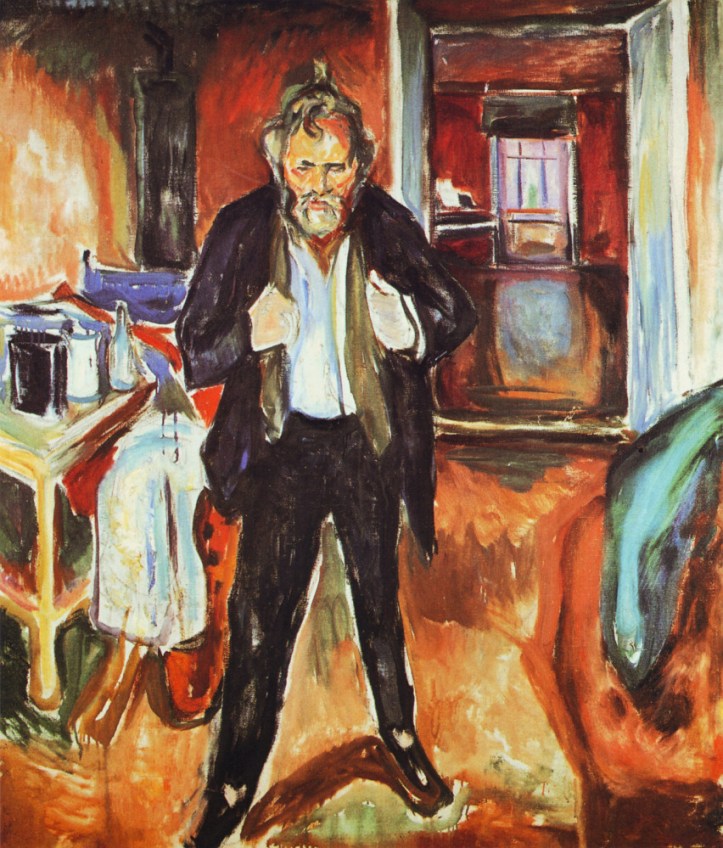 Edvard Munch – Sleepless Night. Self-Portrait in Inner Turmoil (1920). Wikimedia Commons
“You cannot imagine the craving for rest that I feel—a hunger and thirst. For six long days, since my work was done, my mind has been a whirlpool, swift, unprogressive and incessant, a torrent of thoughts leading nowhere, spinning round swift and steady”
H.G. Wells, When the Sleeper Wakes
Insomnia can feel like a slow and insidious kind of torture; the results of being unable to sleep are physical and mental exhaustion. Our brain is working overtime and achieving nothing, an experience perfectly expressed in the words “a torrent of thoughts leading nowhere, spinning round swift and steady.”
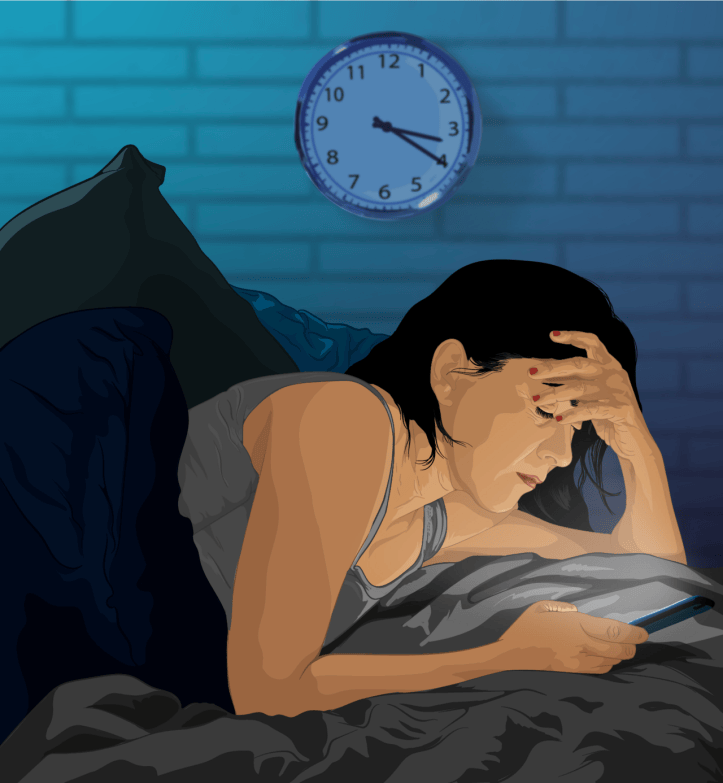 Depiction of a person suffering from Insomnia. 2019.
Author https://www.myupchar.com/en. Wikimedia Commons
“I want to sleep but my brain won’t stop talking to itself.”
Unknown
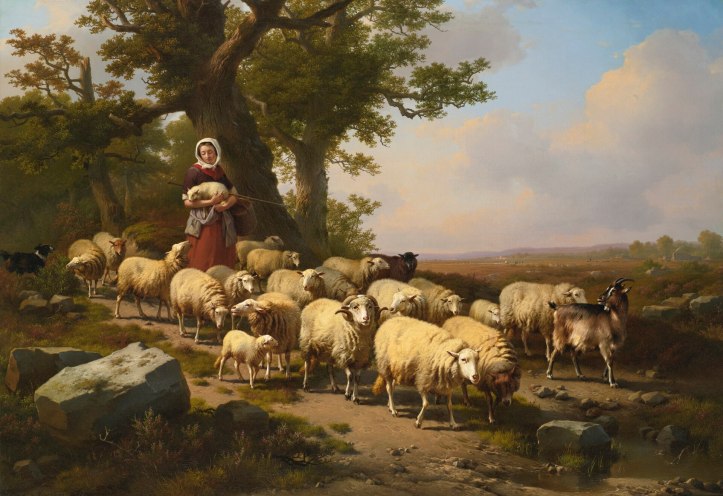 Eugène Verboeckhoven. Shepherdess with Her Flock. 1871. Wikimedia Commons
To Sleep
by William Wordsworth (1770-1850)
A flock of sheep that leisurely pass by
One after one; the sound of rain, and bees
Murmuring; the fall of rivers, winds and seas,
Smooth fields, white sheets of water, and pure sky —I’ve thought of all by turns, and still I lie
Sleepless; and soon the small birds’ melodies
Must hear, first utter’d from my orchard trees,
And the first cuckoo’s melancholy cry.Even thus last night, and two nights more I lay,
And could not win thee, Sleep, by any stealth:
So do not let me wear to-night away.
Without thee what is all the morning’s wealth?
Come, blessed barrier between day and day,
Dear mother of fresh thoughts and joyous health!
This poem by Wordsworth vividly recreates the many thoughts and feelings that insomnia brings to our restless minds. Age-old remedies prove fruitless. Counting sheep does not work for him during his insomnia, nor does imagining water, or picturing other calming and traditionally soothing aspects of nature.
Hearing the first birdsong only brings home to him how he has not slept at all during the hours of darkness. After two nights’ of restlessness, he begs for a night of sleep, one that will enable him to experience a new day of ‘fresh thoughts and joyous health.’ For this is what sound sleep can bring us, and he longs for it.
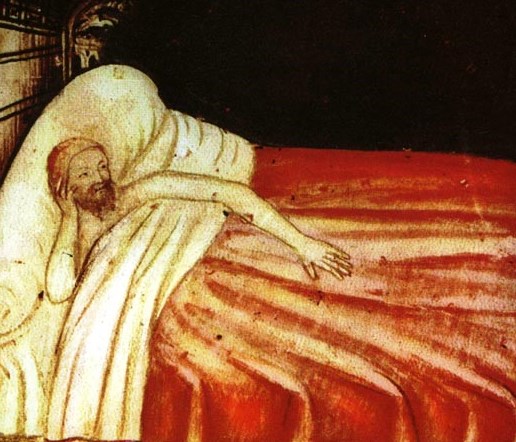
Tacuina Sanitatis (XIV century). 3-aspetti di vita quotidiana, Insonnia, Wikimedia Commons
“A ruffled mind makes a restless pillow.”
Charlotte Bronte
(If you suffer from sleeplessness, follow this link for an NHS guide to finding help.)
- Sleeping sweetly…
Quote 5
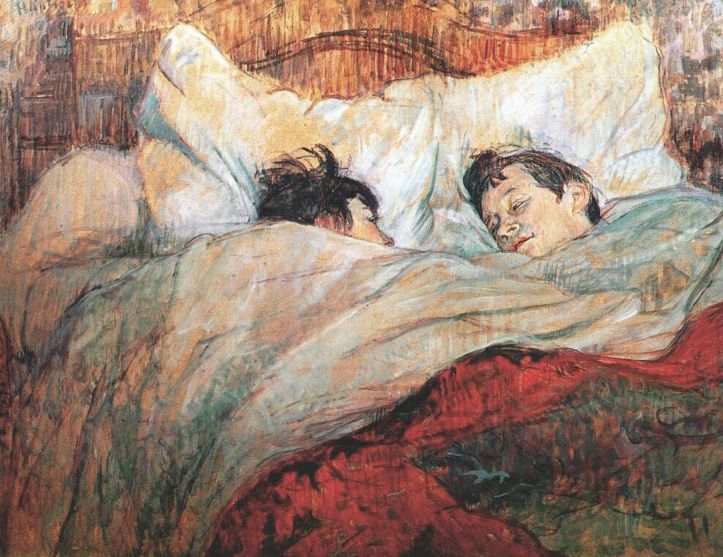 Toulouse Lautrec. Lautrec in Bed 1893. Wikimedia Commons
“I love that moment, when you stop struggling to stay awake and your eyelids shut sink down and you slip effortlessly into another realm that’s beckoning to you.”
Rachel Klein, The Moth Diaries
In contrast, when sleep comes easily and naturally, it can give us enjoyment and respite, refreshing us in ways that set us up for the day. After a really good night’s sleep, we may bounce out of bed, or perhaps long for a little more delicious relaxation…
 Image: Pexels. Miriam Alonso.
“The amount of sleep required by the average person is five minutes more.”
Wilson Mizener
During sound sleep, the body repairs and heals itself; strengthened, ‘reset,’ refreshed and re-energised, we feel more able to face the issues a new day will bring. Sleep enables us to function and learn better, to feel more positive about life, and to be able to focus and concentrate more intensely.
“The best bridge between despair and hope is a good night’s sleep.”
Matthew Walker, Why We Sleep: Unlocking the Power of Sleep and Dreams
 Ślewiński Śpiąca kobieta z kotem 1896 (Sleeping Woman With Cat)Wikimedia Commons
“Sleep crawled on top of me like an affectionate, purring pet-”
M.L. Rio, If We Were Villains
© Linda Berman